
Many people want to smooth out unruly texture without paying salon prices, but they worry about risking their hair's health. Can a keratin treatment at home actually give you smooth results without causing breakage or ruining your recent dye job? Yes, an at-home keratin treatment can be safe for colored and damaged hair, as long as you choose a formaldehyde-free formula and follow the directions carefully. These treatments help fill in broken cuticles so that weak strands can retain moisture and resist environmental humidity.
Can You Do a Keratin Treatment at Home?
Yes, you can do a keratin treatment at home. However, it helps to know what exactly this process does to your hair.
What an At-Home Keratin Treatment Does Inside the Hair Fiber
Unlike perm chemicals that change your texture by modifying your hair's internal bonds, an at-home professional keratin treatment kit works by sealing your hair's outer cuticle and repairing the hair from the inside out. Keratin molecules bond to the porous areas along the hair shaft, creating a protective barrier that reduces humidity penetration while locking in internal moisture. This keeps your hair smoother in humid climates without leaving it dry.
A home kit uses the same treatment a salon does; it just takes longer on your own. Knowing how keratin treatments work helps you avoid patchy results.

Who an At-Home Keratin Treatment Suits
Not all hair types respond the same way to a protein treatment, so manage your expectations based on your texture and chemical history.
Colored and Bleached Hair
Hair that has been bleached or lightened has had its outer cuticle layer lifted. This leaves strands porous and prone to fast color fading. Applying a keratin treatment on colored hair seals those raised cuticles back down. This helps slow fading and adds gloss. Keep in mind that excessive heat can sometimes bring out warm or brassy tones in freshly colored hair. Check out our guide on why keratin can pull warm tones on colored hair to keep your shade vibrant.
- Best for: Porous, color-treated hair that fades quickly or feels dry after dyeing.
Damaged and Over-Processed Hair
Dry, split ends and brittle lengths are typically protein-depleted from over-processing. A keratin treatment for damaged hair temporarily reinforces these weak points, acting like a flexible shield that reduces breakage from brushing.
- Best for: Hair that is slightly to moderately damaged and needs extra structural support.
Frizzy Hair in Coastal Humidity
Humid coastal cities like Jeddah and Dammam make dry hair shafts swell as they pull moisture out of the air, causing instant frizz. When you apply a keratin treatment for frizzy hair, you form a water-resistant layer over the cuticle. This keeps outside humidity from penetrating your strands and lets you enjoy silky smooth hair for up to five months.
- Best for: Unruly, puffy textures that react instantly to humid air.
Fine Hair
Fine strands weigh down easily under heavy products, leaving hair limp or greasy. With The Best, the adjustment is timing, not quantity: saturate each section as directed, keep the product a quarter inch off the scalp and process for the shorter 40-minute window. A keratin treatment for fine hair smooths surface flyaways while keeping your natural volume intact.
- Best for: Flyaway-prone, fine textures that need smoothness without losing body.
Curly and Wavy Hair
If you love your natural shape but struggle with tangles, an at home keratin treatment for curly hair can be a game changer. A keratin treatment loosens curl and wave patterns without erasing definition, unless you choose a straighter finish. Since curly hair tends toward frizz and dryness, keratin smooths and defines curls rather than eliminating them. Not sure which formula fits your texture? See which GK Hair keratin treatment is right for you.
- Best for: Wavy and curly hair types that want a more manageable texture and less daily frizz.
Is a Keratin Treatment at Home Safe?
Yes, especially if you use a formaldehyde-free formula. If you have sensitive skin or a sensitive scalp, or you are pregnant or nursing, talk to your doctor before any type of keratin treatment. If you don't fall into those categories, a formaldehyde-free kit used as directed in a ventilated room is a low-risk choice. Here's the breakdown on damage, side effects and the one ingredient worth checking for before you buy.
Does Keratin Damage Hair?
Not when used as directed. Keratin protein is made up of the same building blocks as your hair, skin and nails. Damage usually comes from ironing too hot, too often or on fragile strands: a scorching straightener with no temperature control, or repeatedly going over the same weak section with hot plates.
Keratin Treatment Side Effects and Who Should Avoid It
Most side effects are mild: eye or scalp irritation, a scratchy throat, headaches from fumes, or flaking where the formula touches skin.
If you have asthma, another respiratory condition or a severe scalp condition, check with your doctor first. Mild irritation usually eases once the room is ventilated. Pregnant or nursing women should avoid traditional chemical smoothing formulas because of the fume exposure, and GK Hair recommends consulting a physician before any hair treatment.
Extra Checks for Colored or Damaged Hair
Patch test the formula behind your ear 48 hours before, and treat one hidden strand first. Work in a well-ventilated room. On over-processed or bleached hair, flat iron at 190°C (375°F) instead of 205°C (400°F), and go lower on very weak ends. If you plan to recolor afterward, use only a deposit-only color with a 10-volume developer or lower, which is what GK Hair recommends after The Best. If wet strands stretch and snap, deep condition for two weeks before you start.
Why a Formaldehyde-Free Formula Matters
Many traditional smoothing formulas contain formaldehyde or methylene glycol, which the U.S. Food and Drug Administration says is released into the air as a gas when heated, causing watery or burning eyes, coughing and wheezing in some people. A formaldehyde free keratin treatment avoids these fumes. Still check labels for formalin or methylene glycol, since OSHA found products labeled formaldehyde free that contained it.
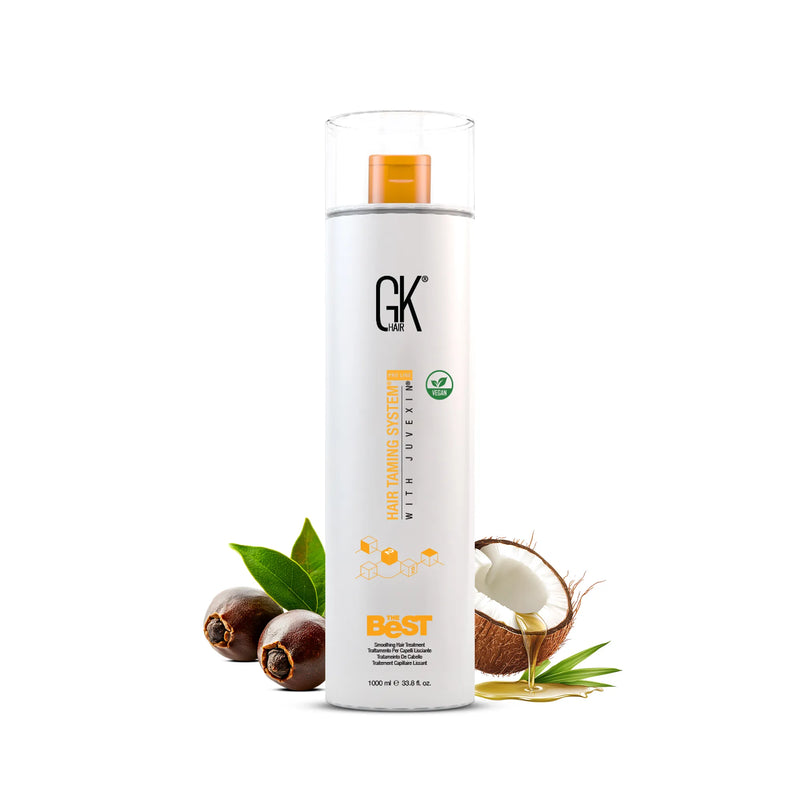
GK Hair The Best contains Juvexin V2, our non-hydrolyzed, plant-based protein derived from quinoa and pea. It penetrates the inner cortex while sealing the outer cuticle, strengthening damaged hair without releasing formaldehyde gas. GK Hair is the first and only company to harness the beauty benefits of Juvexin, which is delivered to the hair in its natural state.
What You Need Before You Start
Choosing a Kit: Professional vs. Drugstore
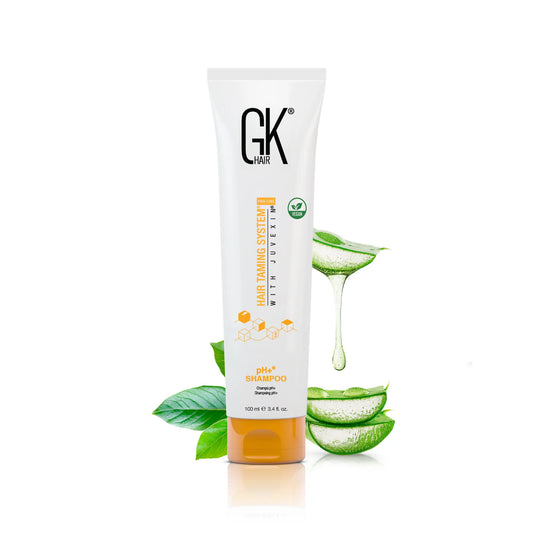
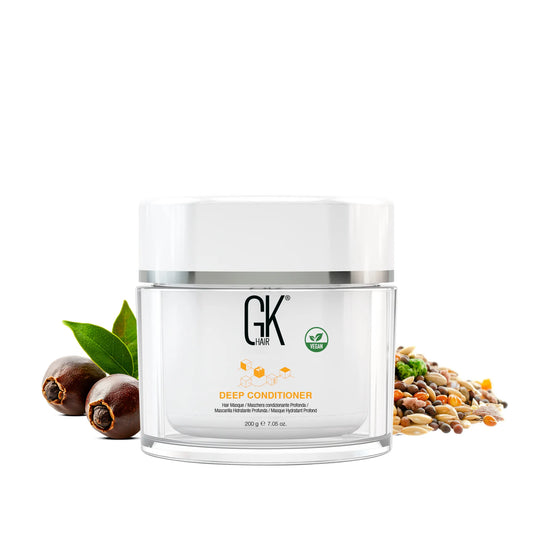
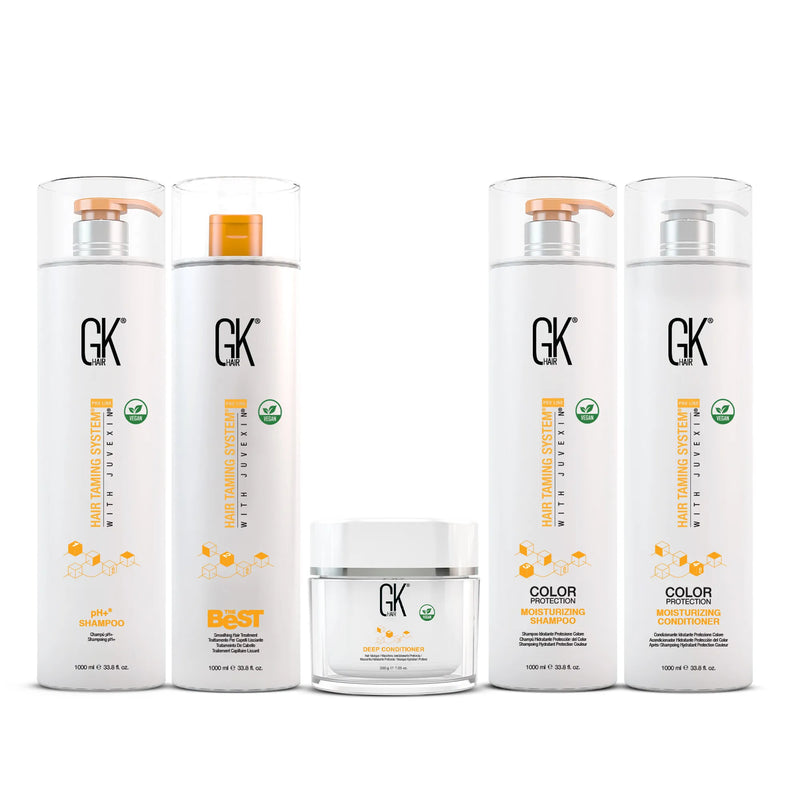
When shopping for the best at home keratin treatment, skip generic drugstore boxes that rely on heavy silicones for temporary shine. Look for an at home keratin treatment kit built on concentrated botanical proteins, natural oils and clear safety certifications. That's why our GK keratin treatment kit, The Best Keratin Professional Hair Kit, suits first-timers: it pairs The Best with pH+ Shampoo and the Color Protection Moisturizing Shampoo and Conditioner. Add Deep Conditioner separately for the five-minute conditioning step after the rinse.
| Feature | Juvexin-Based Treatment | Standard Hydrolyzed Keratin |
|---|---|---|
| Protein Structure | Intact, non-hydrolyzed protein | Broken down, short-chain proteins |
| Formaldehyde Content | Formaldehyde-free | May release fumes when heated |
| Longevity | Lasts up to five months | Varies by formula |
Why Clarifying Shampoo Comes First
Before you jump into the keratin application, start with a clean canvas. A clarifying shampoo before keratin removes build-up and opens the cuticle so the keratin solution can fully bind to your hair shaft. Wash twice, leave it on for three minutes each time and avoid massaging the scalp.

Tools, Sectioning and Heat Settings
To avoid interrupting the application process, gather all your materials before the liquid touches your hair:
- Wide tooth comb and non-metal sectioning clips
- Tint brush and gloves
- Plastic processing cap
- Blow dryer with a nozzle attachment and a round brush
- Flat iron with adjustable temperature settings (up to 205°C / 400°F)
How to Do a Keratin Treatment at Home: A Step-by-Step Process
A keratin treatment at home follows a fairly mechanical process once you know the keratin treatment steps. It just takes patience. These are the steps GK Hair publishes for The Best:
- Clarify. Wash twice with pH+ Clarifying Shampoo, leaving it on for three minutes each time. Towel dry and brush through.
- Apply. Starting at the nape, brush The Best onto ½-inch sections, staying ¼ inch from the scalp, until the hair is fully saturated.
- Process. Cover with a plastic cap for 40 minutes on fine or wavy hair, or up to 60 minutes on thick, coarse or tightly curled hair.
- Rinse. Rinse with warm water until it runs clear. On color-treated, over-processed or porous hair, wash once with Color Protection Moisturizing Shampoo, focusing on the ends, and rinse.
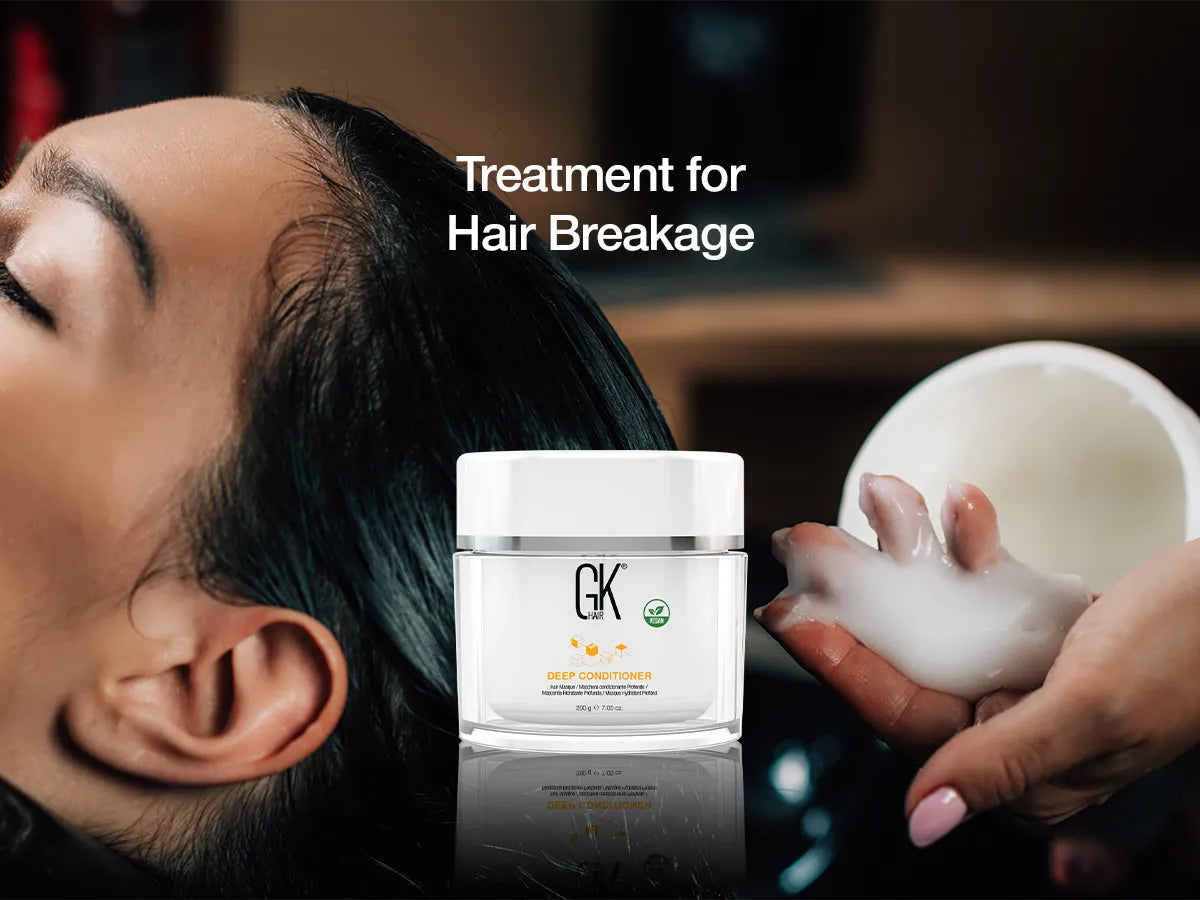
- Condition. Apply Deep Conditioner to all hair types, leave it on for five minutes and rinse.
- Blow dry. Blow dry straight on high heat with a round brush until the hair is 100% dry.
- Seal. Flat iron each section two to four times at 205°C (400°F), or 190°C (375°F) on over-processed hair.
Stylist's Corner: Always work in horizontal sections no thicker than half an inch (about 1.3 cm). If a section is too thick, heat from the flat iron plates will not reach the inner strands evenly, leaving patchy, frizzy roots right next to sleek ends.
How Long Does the Whole Process Take?
If you're curious how long a keratin treatment takes, know that an at-home kit takes longer than a salon visit would, and most of that time is spent processing and drying. Expect two to four hours in total, depending on your hair's length, density and thickness.
What Results to Expect
Keratin Treatment Before and After: What Changes and What Does Not
Expect hair that dries faster and stays smooth and shiny for up to five months with sulfate-free aftercare. It will feel softer, brush out without snapping and resist humidity-induced frizz.

Does Keratin Actually Straighten Hair?
So, does keratin straighten hair permanently? No. A keratin treatment will not permanently alter your hair's natural texture. It smooths stubborn wave patterns and eliminates surface frizz, but it will not give you the pin-straight look of a chemical relaxer. Instead, it makes your hair easier and faster to blow dry straight whenever you style it.
Keratin Treatment Aftercare
Proper post-treatment maintenance is crucial if you want to protect your investment and extend your hair's silky texture.
- Swap to a sulfate free shampoo after keratin. Sulfates strip protein coatings quickly. Wash with our Color Protection Moisturizing Shampoo and Conditioner to keep the cuticle sealed.
- Add a Deep Conditioner every two weeks to keep hair from drying out between washes.
- Use a heat protectant before any styling tool, even a quick touch-up.
- Sleep on a silk or satin pillowcase to cut down on friction and overnight frizz.
- Keep DIY care light. You might wonder whether a DIY keratin treatment like an egg or yogurt mask works the same as a kit. Not exactly. Food masks give strands temporary moisture, but they don't contain a professional formula's smoothing proteins that bind to the cuticle for longer-lasting results.

Keratin Treatment Cost: At Home vs. Salon
Prices vary from salon to salon, but professional keratin smoothing treatments in Saudi Arabia typically cost anywhere from 800 to 2,500 SAR per session, depending on the salon's reputation and how long your hair is. Doing it yourself costs a fraction of that. The Best comes in 100ml, 300ml and 1000ml sizes to match your hair's length and thickness.
Final Thoughts
Salon-smooth hair at home comes down to a formaldehyde-free formula, heat matched to your hair and sulfate-free aftercare, starting with our treatment range.
Frequently Asked Questions
How Soon Can I Wash My Hair After an At-Home Keratin Treatment?
Whenever you like. The Best allows same-day washing, unlike traditional formulas that need a wait of 48 to 72 hours. Sulfate-free GK Hair aftercare keeps results for up to five months.
Can I Color My Hair After a Keratin Treatment?
Yes. GK Hair's FAQ allows color and The Best on the same day, but after the treatment use only a deposit-only color with a 10-volume developer or lower. If you can, color a few days before the treatment instead, so the clarifying prep wash doesn't dull fresh color.
Can I Use a Keratin Kit if My Hair Is Actively Breaking?
It depends on the cause. If breakage comes from dryness or heat damage, a smoothing, moisturizing formula can truly benefit your hair. If it comes from chemical over-processing, bleach or relaxers done too close together, give hair a reset with deep conditioning first.
Do At-Home Keratin Treatments Work?
Yes, when you use a professional formula as directed. A kit like The Best smooths frizz, makes styling easier and lasts up to five months, while homemade egg or yogurt masks only add moisture that rinses out in a wash or two.
How Often Can an At-Home Keratin Treatment Be Repeated?
Every three to five months is the general range, once the previous treatment has washed away or grown out. Repeating it too soon on top of existing build-up can leave hair feeling coated instead of smooth.