
Healthy hair is usually the result of a few boring choices made consistently. A hair care routine is simply a set of steps you follow regularly to keep your scalp clean and your hair moisturised, manageable and protected from damage. The real goal is fewer breakage days, easier styling, and shine that does not disappear by midday.
A basic hair care routine has six steps: cleanse your scalp, condition your lengths, detangle gently, treat weekly, protect before heat and finish with a light serum. Most people in Saudi Arabia do best washing two to three times a week, because outdoor heat builds oil while indoor AC dries the lengths.
How Do I Start a Haircare Routine?
Start with three products, not ten: a shampoo matched to your scalp, a conditioner matched to your lengths, and one weekly treatment. Use them for four weeks before adding anything else. That window is long enough to tell whether your hair actually needs more moisture, less oil, or simply gentler handling, and short enough that you have not spent money guessing.
Most routines fail because they are assembled all at once. You add a serum, a mask, a leave-in and a scalp scrub in the same week, your hair changes, and you have no idea which product did it. Adding one product at a time is slower, but it is the only way to learn what your hair responds to.
If you are starting from nothing, our Moisturizing Shampoo and Conditioner is the safest first purchase for normal-to-dry hair, and Balancing Shampoo and Conditioner is the equivalent for roots that turn oily within a day.
What Are the Steps in a Hair Care Routine?
Building a hair care routine is simple. It has six steps: cleanse, condition, detangle, treat, protect before heat and finish lightly. Keeping them in this order prevents you from adding products randomly and helps each step serve a purpose.
1. Cleanse your scalp
This is the step that matters most. Apply shampoo mainly to the scalp rather than scrubbing the entire length. Your scalp is where sweat, oil, dead skin and styling residue collect. The lengths need less direct cleansing because shampoo flowing through them during rinsing is often enough. Massage gently with your fingertips. There is no need to scratch or aggressively scrub.
2. Condition the lengths
After rinsing your shampoo, apply conditioner through the mid-lengths and ends. Fine or straight hair may need conditioner mainly on the ends, while dry or curly hair may benefit from conditioning more of the length. Leave the conditioner on for a few minutes according to the product directions. Then rinse thoroughly.
3. Detangle gently
Do not rush this part. Wet hair can be more vulnerable to breakage, so work from the ends upward instead of dragging a comb from the roots to the tips. A wide-tooth comb can make the process easier. Detangle gently and avoid rough towel rubbing, because rough handling can contribute to damage.
4. Add your treatment
Not every wash needs a long treatment. A weekly deep-conditioning session is usually enough for many people unless their hair has specific needs. Apply the treatment thoroughly rather than putting most of it on the front sections that are easiest to reach.
5. Protect before heat styling
If you are using a blow dryer, straightener or curling tool, apply an appropriate heat protectant first. Heat styling does not have to disappear from your routine. It simply needs to be controlled. Use lower or medium heat where possible and avoid repeatedly passing a hot tool over the same section.
6. Finish lightly
Once the hair is dry, use a small amount of serum if you need extra shine or frizz control. The goal is to finish the style without weighing down the hair.
Daily, Weekly and Monthly Hair Care Routines Compared
| Routine | What to do | How often | Main goal |
|---|---|---|---|
| Daily hair care routine | Gently detangle, smooth dry ends if needed, and protect hair from unnecessary friction and heat | Daily | Keep hair manageable and reduce breakage |
| Weekly hair care routine | Cleanse, condition and use a deep-conditioning treatment when hair feels dry or difficult to manage | 1-2 times a week, depending on your hair and scalp | Restore softness and moisture |
| Monthly hair care routine | Review how your hair is responding, check for buildup, trim split ends when needed and adjust products if your needs have changed | Once a month | Keep the routine effective as your hair changes |
How Often Should You Wash Your Hair?
There is no universal wash schedule, and dermatological guidance deliberately avoids setting one. The American Academy of Dermatology advises washing based on how quickly your hair gets oily: daily can suit straight hair with an oily scalp, while dry, curly or thick hair needs a wash at least once every two to three weeks.
Two to three washes a week is where most people in Saudi Arabia land, because outdoor heat pushes wash frequency up while air conditioning dries the lengths and pushes it back down. Start there, then let your scalp move you in either direction.
Signs you may be overwashing
Your hair may be asking for a gentler schedule if:
- Your lengths feel dry shortly after washing.
- Your scalp feels tight or uncomfortable.
- Your hair becomes difficult to style because it feels rough.
- You find yourself adding more products to compensate for dryness.
Your Night Hair Care Routine
A night hair care routine is mostly about reducing friction. Going to bed with wet hair creates tangles and mechanical stress, because hair is weaker when wet and stretches more easily under friction. Let it dry before sleeping whenever practical.
Swap a cotton pillowcase for satin or silk, or wrap hair in a bonnet. Cotton is more absorbent and has a rougher surface than satin or silk, so it draws moisture from the hair and creates friction as you move overnight.
If your hair is long, gather it loosely at the nape rather than tying it up. Avoid anything that pulls tightly on the roots overnight, including the elastics and clips that feel secure at 11 pm. The same applies to extensions and protective styles: they should never cause persistent pulling or discomfort.
Hair Care Routine by Hair Type and Texture
Your hair texture changes how products spread, how quickly the hair dries and how easily it holds moisture.
1. Straight hair care routine
Straight hair often shows oil and buildup quickly because sebum can travel down the hair shaft easily. Focus shampoo on the scalp and keep heavier products away from the roots. The conditioner can be concentrated on the ends. For styling, lightweight products are usually easier to manage than several layers of creams and oils.
2. Wavy hair care routine
Wavy hair sits somewhere between straight and curly hair. It can become flat when overloaded but frizzy when it lacks moisture. Use enough conditioner to improve slip, then avoid excessive brushing once the wave pattern begins to form. A lightweight leave-in product can help with frizz without completely weighing down the waves.
3. Curly hair care routine
Curly hair often benefits from more moisture because the shape of the strand can make it harder for natural oils to travel from the scalp to the ends. Focus conditioning on the length and detangle gently while the hair has enough slip. Avoid constantly brushing curls once dry if doing so causes frizz or disrupts the pattern.
4. Fine hair care routine
Fine hair can become weighed down easily. That does not mean it needs less care. It means product quantity matters. Start with small amounts and add more only when necessary. Heavy oils and rich styling creams may be better reserved for the ends or occasional treatments.
5. Long hair care routine
With long hair, the ends have simply been exposed to more washing, brushing, heat and environmental stress over time. Give extra attention to the oldest part of the hair: the ends. Condition them consistently, detangle from the bottom upward and use heat protection whenever you style.
Hair Care Routine by Concern
1. Dry hair
Dry hair needs moisture without unnecessary stripping. Start with a moisturising cleanser, condition every wash and add a weekly treatment. Reduce very hot water and avoid rough towel drying. For dry or coarse hair, GK Hair Moisturizing Shampoo and Conditioner is designed to provide hydration and softness.
Best for: Normal-to-dry and coarse hair that needs more moisture and easier handling.

2. Frizzy hair
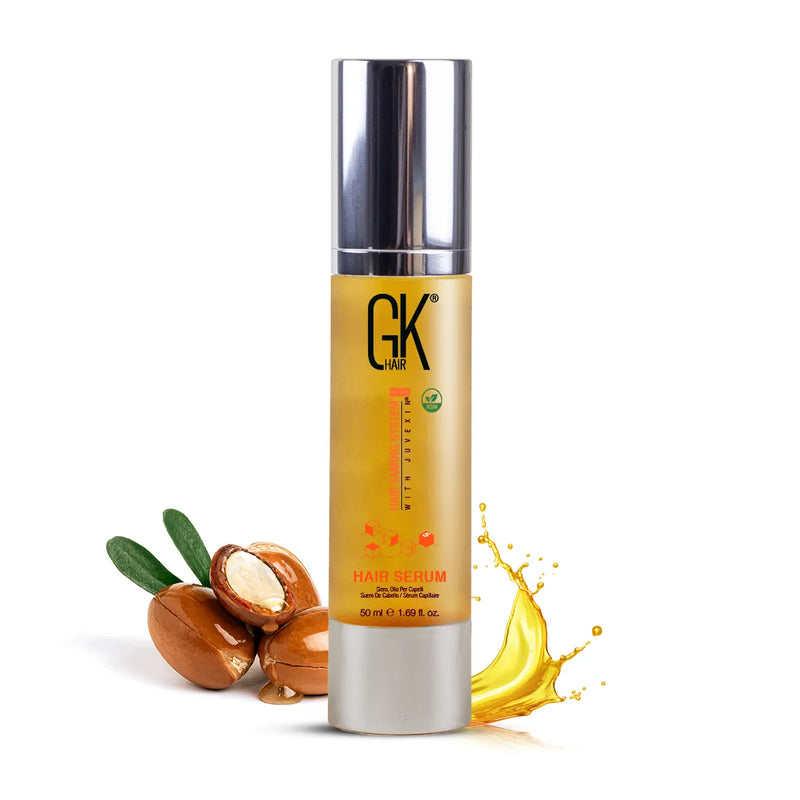
Frizz is often made worse by dryness, humidity, rough handling and heat damage. Use conditioner consistently for dry, frizzy hair and avoid rubbing the hair aggressively with a towel. A serum on the mid-lengths and ends can also help smooth the finished style. Argan Oil Serum is an easy finish on mid-lengths and ends.
3. Oily scalp
If your scalp becomes oily quickly while your ends remain dry, treat those areas differently. A balancing cleanser can keep the scalp feeling fresh without forcing you to strip the lengths repeatedly. Our Balancing Shampoo and Conditioner is designed for oily hair and can be considered when excess oil is the main concern.
Best for: Oily roots, excess sebum and hair that becomes greasy quickly.

4. Damaged hair
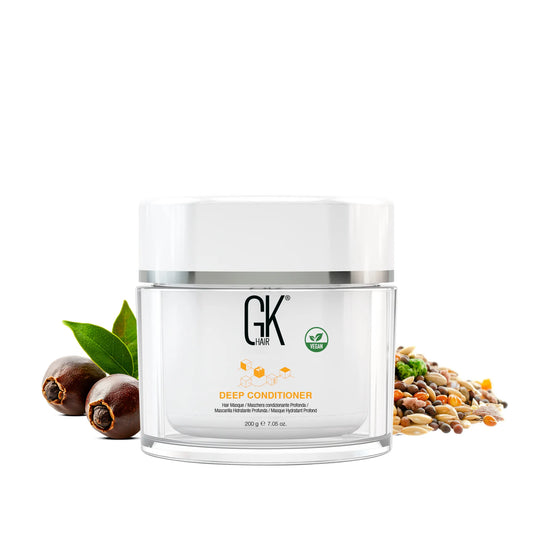
Where a weekly step helps most is deep conditioning. Our Deep Conditioner is formulated with Juvexin V2 alongside jojoba seed oil to restore moisture in hair weakened by chemical services, heat styling and environmental stress. Use it once every seven to ten days on mid-lengths and ends.
Best for: Dry, brittle or chemically processed hair that has lost softness.

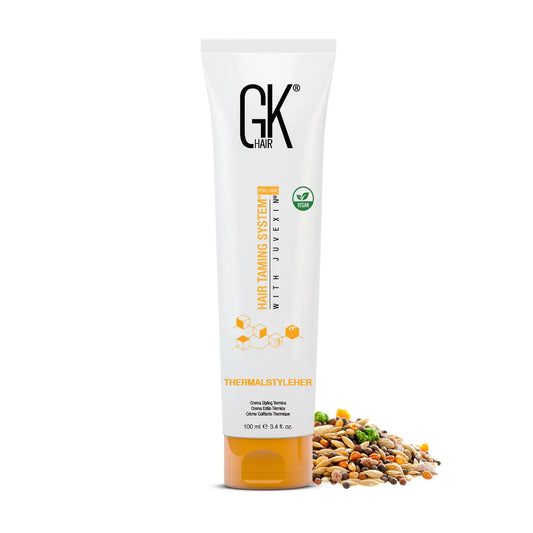
If heat styling is part of the damage, ThermalStyleHer Cream is worth adding before the dryer. It forms a heat barrier while conditioning, so you are not choosing between styling and protecting.
Best for: Anyone who blow-dries or flat-irons more than twice a week.

If your hair has been heavily bleached, speak with a stylist before adding another chemical service.
5. Coloured hair
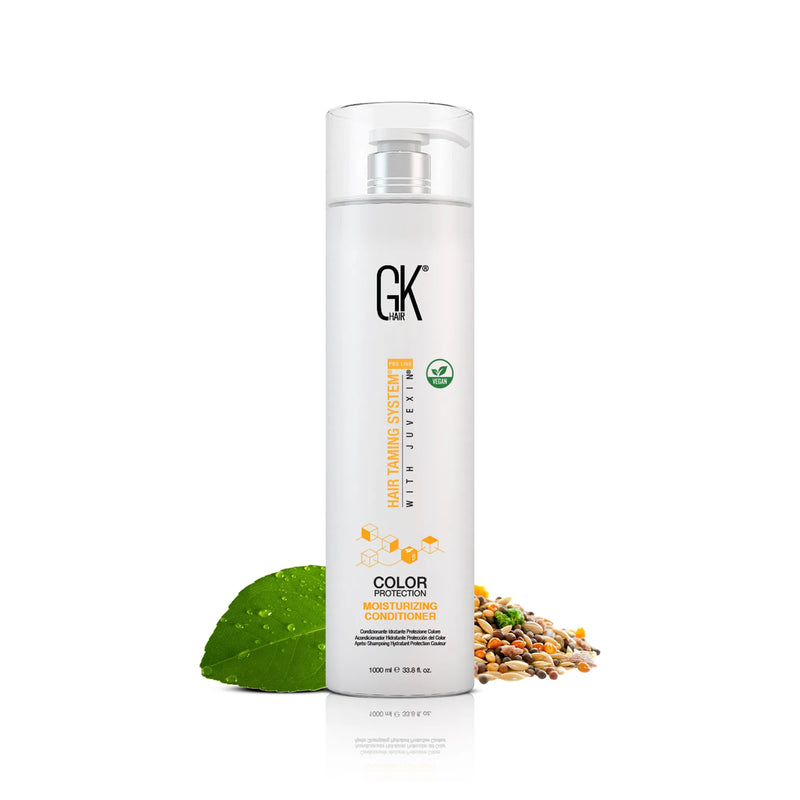
Colour-treated hair loses vibrancy to two things here: washing and sun. Our Shield Shampoo and Conditioner is sulphate-free and adds UV/UVA protection, so it helps colour-treated hair resist fading from both washing and sun.
Best for: Coloured or highlighted hair with regular sun exposure, where fade resistance matters as much as condition.

These are the products our stylists reach for most often, and the range they come from is used in salons across more than 75 countries. Every product in this routine is built on Juvexin V2, our plant-based protein from quinoa and pea. Because Juvexin V2 is non-hydrolysed, its smaller molecules work into the cortex while the larger ones wrap the cuticle to shield it from UV and pollution.
How Hair Porosity Changes Your Routine
Hair porosity describes how easily moisture and oils pass in and out of the cuticle, and heat and chemical processing can raise it. Low-porosity hair tends to resist moisture, while higher-porosity hair generally absorbs water more easily but may lose moisture faster.
A 60-second porosity check at home
- Fill a clear glass with room-temperature water.
- Take a clean strand of shed hair and place it gently on the surface.
- Wait about one minute.
Treat this as a rough sort, not a diagnosis. If your strand floated, use less product than the bottle suggests and apply it to damp rather than dry hair. Low-porosity hair sits closed, so anything heavy will coat rather than absorb. If it sank quickly, your hair takes moisture in fast and loses it just as fast, so the fix is not more conditioner but a leave-in after washing to hold what you just put in. If it hovered mid-glass, your porosity is medium and your current routine likely suits it.
Stylist's Corner: When a client tells us their conditioner stopped working, the conditioner is almost never the problem. The fix is a clarifying wash every two to three weeks, not more conditioner, which only adds another layer on top of the buildup. Follow the clarifier with your usual conditioner in the same shower, because clarifying alone will leave the lengths feeling stripped.
Adjusting Your Routine for the Saudi Climate
Three local factors change what a routine needs to do here, and none of them are about heat alone.
- Hard and desalinated water: Mineral levels vary by city. Desalinated supply is relatively soft, but where it is blended with hard groundwater, as in parts of Riyadh, minerals settle on the cuticle, leaving hair coated and dull and colour fading unevenly. A clarifying wash every two to three weeks resets this.
- Sun exposure: UV weakens the hair fibre and speeds colour fade over time, which is what Shield Shampoo and Conditioner's UV/UVA protection is for.
- Air conditioning: Conditioned indoor air is very dry, so hair loses moisture across a working day even when you never step outside. A lightweight leave-in or a small amount of serum on mid-lengths at midday does more for this than a richer wash-day conditioner.
Frequently Asked Questions
What are 5 hair care tips?
Five habits do most of the work: apply shampoo to the scalp rather than the full length, keep conditioner on the mid-lengths and ends, detangle wet hair with a wide-tooth comb from the ends upward, use a heat protectant every time you style, and eat enough protein and iron to support new growth. Consistency matters more than the products themselves.
Which foods support hair health?
Hair is largely made of protein, and the American Academy of Dermatology notes that too little iron, protein, biotin or zinc is among the causes of hair loss. A balanced diet supports normal growth, but food alone will not correct every hair concern. If you are seeing significant shedding or thinning, speak with a healthcare professional rather than relying on supplements.
How to tell if your hair is unhealthy?
Four signs are reliable. Your ends feel rough to the touch even when the hair photographs well. Tangling has increased, particularly after washing. Your roots turn heavy while the lengths still feel dry, which points to a mismatched wash routine. And shine lasts a day rather than until the next wash. Any two together are worth acting on.
What is a perfect hair care routine?
A good hair care routine follows six steps: cleanse the scalp, condition the lengths, detangle gently, treat weekly, protect before heat styling and finish with a light serum. Most people can start with two to three wash days a week, then adjust to how quickly their scalp gets oily.
Final Note
If you want a simple set for your hair care routine, start with the Moisturizing Shampoo and Conditioner for the wash and the Argan Oil Serum for the finish. That covers cleanse, condition and shine in two purchases. For everything else, explore our moisture and hydration range.