
At some point, many of us end up googling “curling my hair with a flat iron” when their usual wand curls start looking limp or uneven after a few hours, especially in sticky weather where everything wants to fall flat.
It's not that the wand broke, you just need what can create beautiful curls or waves that hold.
The problem isn't the tool; it's nailing the twist-and-glide technique so the curl forms smooth and even without kinks or dents from the clamp.
Why Flat Iron Curls Feel Different (in a Good Way)
It’s fair to ask: If curling wands exist, why bother with a flat iron?
The answer is in how the curls behave. Flat iron curls tend to sit smoother at the root, flow more naturally through the length, and hold their shape better in environments like Saudi Arabia, where dryness and heat can make hair either swell or fall flat without warning.
A flat iron works differently because it smooths the cuticle while shaping the hair. That detail alone changes the outcome. Instead of fluffy or overly round curls, you get defined bends with movement. For hair that frizzes easily, experiences moisture loss or reacts to temperature shifts, this makes a visible difference.
Start With the Base, Not the Tool
Just so you know, readiness is more important.
Be reflective and ask these questions:
- Is my hair fully dry, or just “mostly” dry?
- Did I distribute the heat protectant evenly, or did I rush it?
- Am I working in sections I can actually manage?
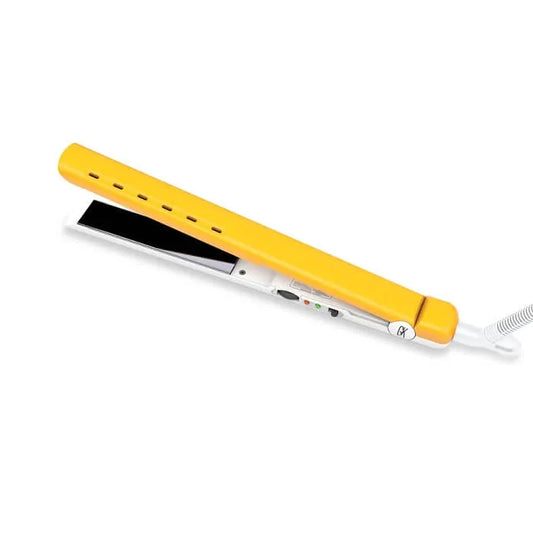
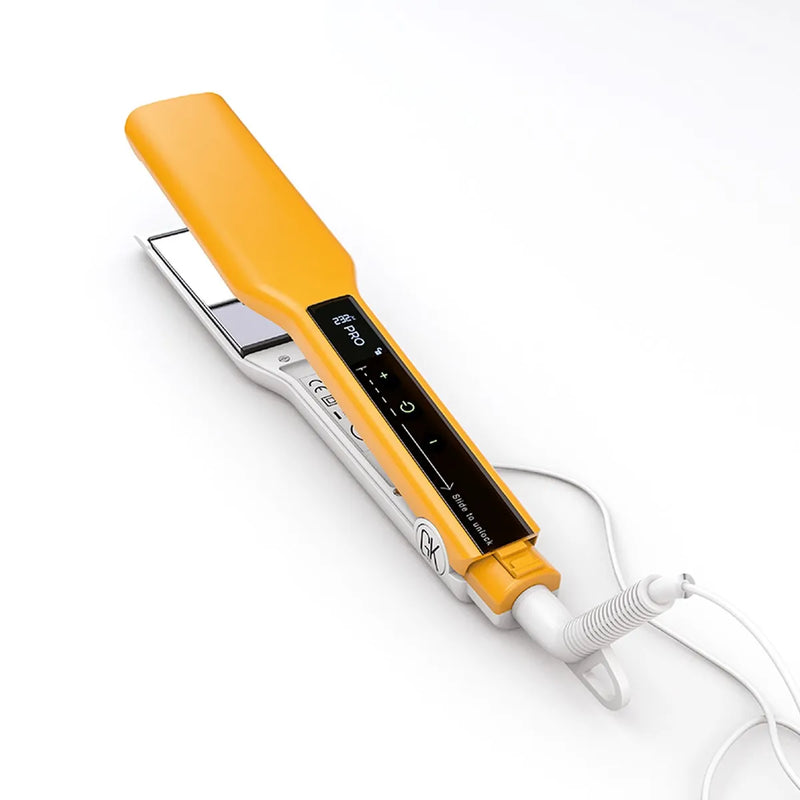
Flat iron curls don’t reward shortcuts. Hair that’s damp, rushed, or overloaded with product won’t respond cleanly. You get the best results when hair is smooth and not slippery, protected but still responsive. Then for the tool, you have to get a good flat iron. Something convenient and easy to use like GK Hair's Easy Control Titanium Flat Iron.

In Saudi Arabia’s dry climate, skipping heat protection isn’t an option. At the same time, heavy creams can make curls collapse. All that is required is balance, slip for the iron to glide, and grip for the curl to hold. That's where a lightweight hairspray like GK Hair’s Leave-In Hair Spray comes in.
The Technique Most People Are Never Taught
Here’s where things usually go wrong: flat iron gets treated like a clamp instead of a shaping tool.
Curling isn’t about squeezing and pulling. It’s about rotation, tension, and timing. A small wrist movement can be the difference between a soft wave and a harsh crease.
The motion is simple, but intentional. Clamp near the root (without touching the scalp), rotate the wrist slightly away from the face, and glide downward at a steady pace. Release the curl gently and leave it alone for a moment. Tugging or shaking it too soon can disrupt its shape.
That controlled rotation is what makes curling your hair with a flat iron look fluid instead of forced.
Direction Is What Separates “Done” From “Styled”
One detail that often gets skipped is curl direction and it matters more than people realise.
For a polished, modern finish, front sections usually look best curled away from the face. Toward the back, alternating directions create depth and softness. Leaving the very ends slightly straighter can also help the style feel lighter and more natural.
This approach adds dimension without making the hair look overworked. It’s the kind of styling that feels appropriate for everyday wear but still holds up for formal settings and long social days.
Making Flat Iron Curls Last
If your curls disappear quickly, heat isn’t the problem.
Longevity comes from control and cooling. After releasing each curl, let it cool completely before touching it. Warm curls are still flexible; once they cool, they set. Rushing this step is why curls fall out early.
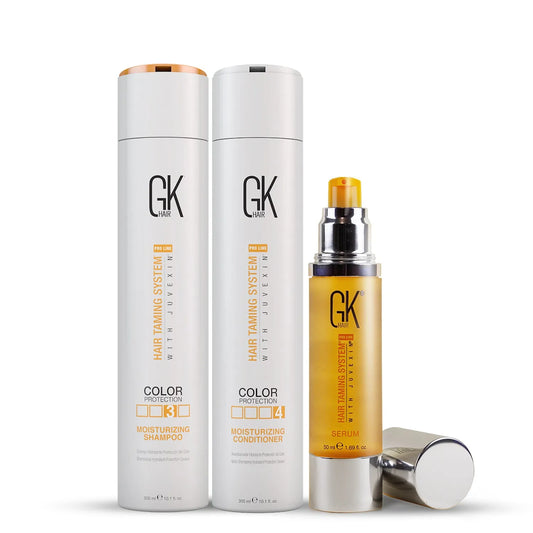
Resist brushing right away. Start with your fingers, let the shape settle, and only loosen further if needed. A lightweight serum like GK Hair's Argan Oil Serum applied after styling, helps maintain movement without stiffness. This is especially useful in air-conditioned environments, which can flatten hair faster than outdoor heat.

How Often Is Too Often?
This question comes up constantly: how often can I flat iron my hair without causing damage?
There isn’t a universal number. Hair that’s well-prepped, protected, and styled with moderate heat will tolerate styling better than hair that’s rushed and overheated. That said, frequency still matters.
Using a flat iron several times a week without deep conditioning or breaks will show the damage over time, particularly in dry climates. The goal isn’t to avoid heat entirely. It’s to use it with intention, not habit.
To protect your hair from heat damage, read more on: Hair Dryer Mistakes That Are Damaging Your Hair: How to Avoid Them
Flat Iron vs Wand: The Real Difference
When people compare “curling my hair with a straightener to using a wand, convenience usually gets the spotlight. The finishing is the real difference.
Flat iron curls tend to blend better with layers, sit smoother at the root, and transition easily from day to night. They also hold up better through long days, outfit changes, and formal events.
Wand curls can be beautiful, but they’re often more uniform and more sensitive to environmental changes. For curls that need to last without constant touch-ups, a flat iron quietly does the job better.
Texture Changes the Rules
Not all hair responds the same way, so adjustments matter.
Fine hair needs lower heat and slower passes. Thick hair benefits from smaller sections and steady tension. Coarse textures respond best to controlled heat with fewer passes rather than repeated ones.
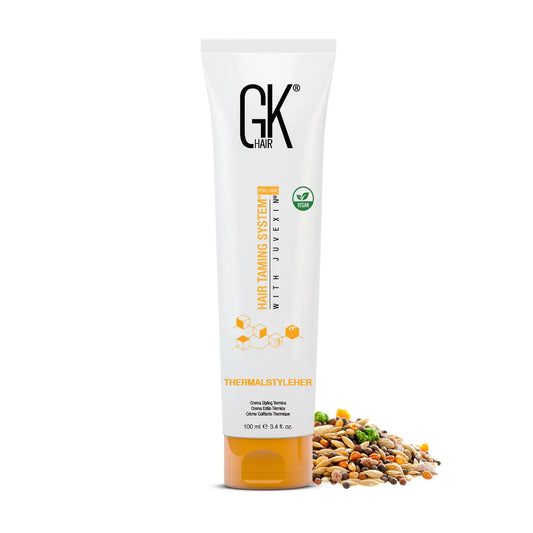
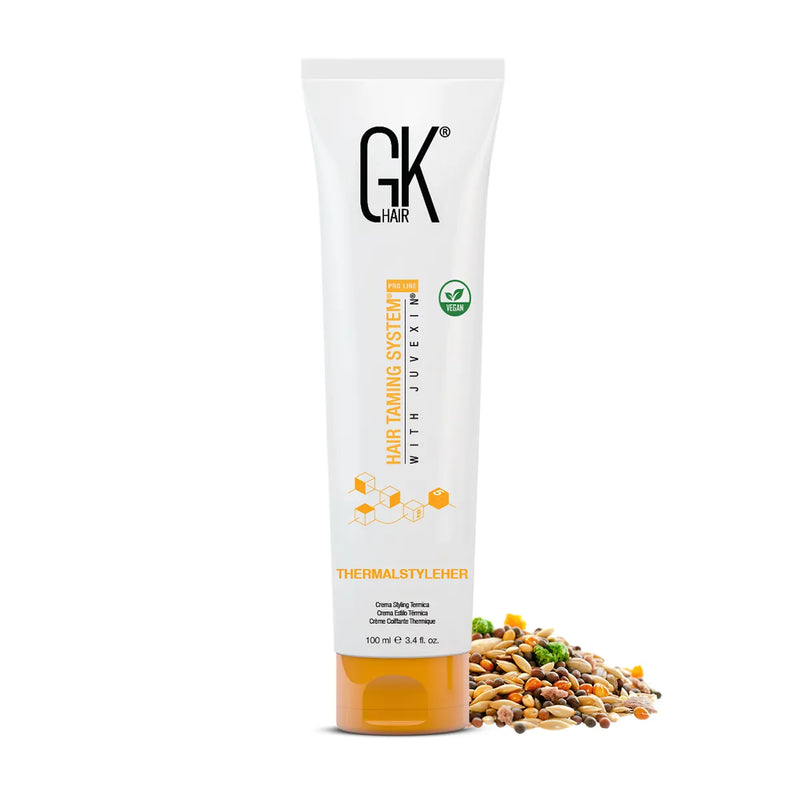
For textured or treated hair, flat irons offer more predictability than many curling tools. The key is patience. One clean pass is always better than multiple rushed ones, and it is important you never skip thermal protection. GK Hair’s ThermalStyleHer is the perfect shield for your hair when styling.

Styling With Saudi Life in Mind
Hair here needs to cooperate with your day.
Between outdoor heat, indoor air conditioning, modest fashion layers, and long social hours, curls need structure without bulk. Flat iron curls sit closer to the head while still moving naturally, making them practical under scarves, abayas, and structured clothing.
They stay smooth, reflective, and controlled without looking stiff or flat.
Mistakes That Ruin an Otherwise Good Style
A few habits can undo your effort quickly:
- Holding the iron too tightly can create creases.
- Moving too fast, so curls never form properly.
- Applying too much product before styling.
- Touching curls while they’re still warm.
None of these means you’re bad at styling. They just mean no one explained what actually affects the result.
Why This Skill Is Worth Learning
Learning this technique isn’t about replacing other tools. It’s about flexibility. A flat iron lets you adapt, soft bends one day, polished curls the next, subtle movement for daily wear or refined waves for events.
Once the method becomes familiar, you won't need to google “curling my hair with a flat iron”. It will stop feeling like work. It becomes a skill you trust. That confidence shows in the finish.
Final Thoughts
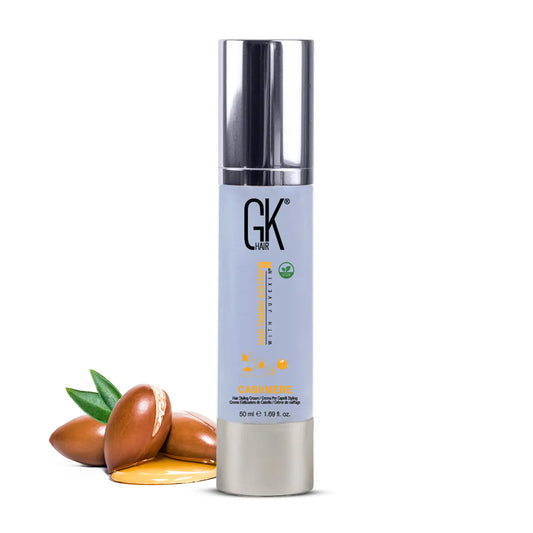
Hair doesn’t need to be complicated to look good. It needs understanding. Flat iron curls work because they respect the structure of the hair while shaping it deliberately. Then, using an excellent styling aid alongside, like GK Hair’s Cashmere Hair Cream, makes your hairdo flawless.
When you know what you’re doing, styling stops feeling like a chore and becomes a choice. That’s when curls stop falling flat, not just in shape, but in impact.